
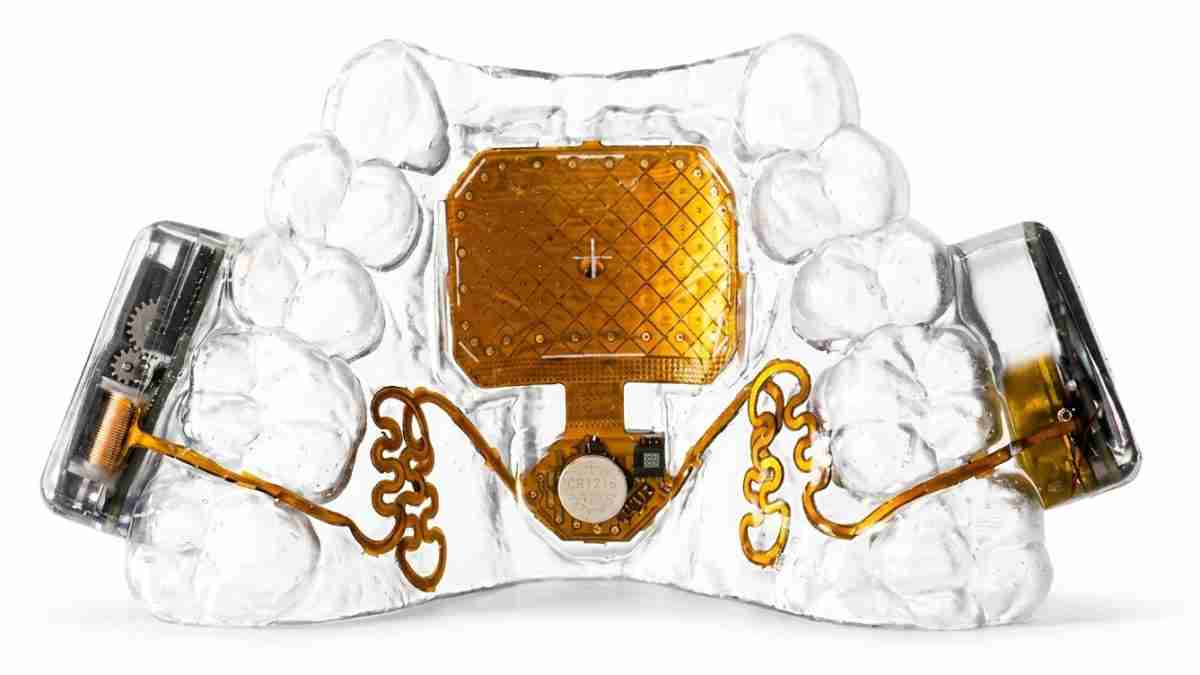
MADISON, Wis., Aug. 14 (Nationwide Times) — Augmental Technologies’ MouthPad is a custom-fit mouthpiece that lets users control a phone, tablet or computer with tongue and head movements. The device is priced at $1,400 for one unit and is currently sold and shipped only to U.S. addresses, according to Augmental’s product information.
The company announced public U.S. sales on July 22, 2026, after an Early Access program that began in 2024. Augmental says the device can be used outside the United States once obtained because it is not geo-restricted.
How the device works
MouthPad contains a pressure-sensitive touchpad that rests against the roof of the mouth. It also uses motion sensing to track head movements.
A user can move a cursor with the tongue or by moving the head. A tongue press can act as a left click or begin a click-and-drag action. Augmental also describes a sip gesture for a right click. Other controls include scrolling, dragging and swiping.
The device connects over Bluetooth. Augmental lists compatibility with macOS, Windows, Linux, iOS and Android, allowing it to work with computers, phones and tablets.
Why it is designed this way
Augmental says MouthPad is intended to provide another way for people with limited mobility to interact with everyday technology. MIT News described the device as technology for people with movement impairments.
The company says the product is intended for people over 18 who have sufficient tongue dexterity. That requirement means MouthPad is not a universal replacement for a mouse or touchscreen; it depends on a user’s ability to make the required tongue and head movements.
Custom fitting and delivery
Each MouthPad is made for an individual user. Augmental says the fitting process starts with an intraoral or dental 3D scan, which is used to design the mouthpiece.
The company says delivery takes about six months after it receives the scan. Augmental also says the scan generally costs between $50 and $150, depending on the provider. The scan cost is separate from the device price.
A second device for the same user costs $1,900, according to Augmental.
What remains unclear
The available information does not include independent testing of MouthPad’s accuracy, comfort, effect on speech or benefits for users with disabilities. It also does not establish whether the device has received regulatory clearance or what health and safety testing it has undergone.
Reports have described battery life of more than seven hours, but the research available for this report did not confirm that specification through Augmental’s official product information. Weight reports also differ by model and source, so no single figure is included here.
There is no independent security assessment in the available material covering the device’s Bluetooth connection or the handling of user data. For now, the clearest limits are practical: the mouthpiece must be custom-fitted, delivery is measured in months, and commercial sales and shipping are limited to the United States.
