
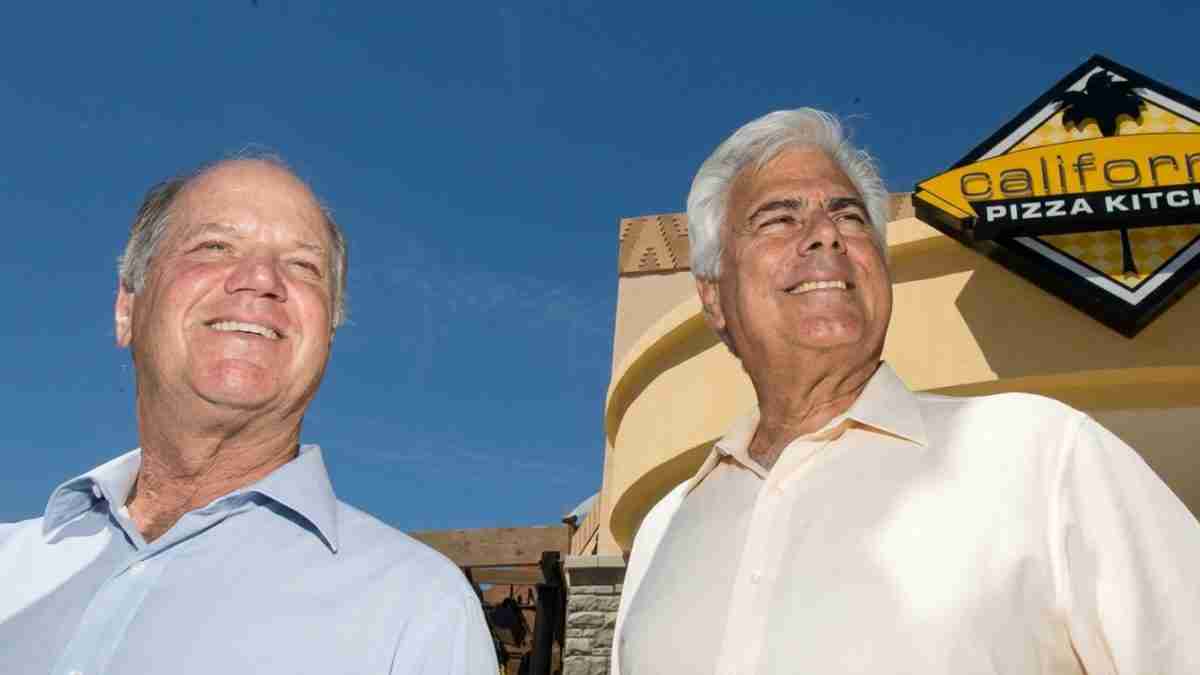
BEVERLY HILLS, Calif., Aug. 16 (Our California Times) — California Pizza Kitchen has changed owners, strategy and scale several times since its first restaurant opened in Beverly Hills in 1985. Now, co-founder Rick Rosenfield is speaking publicly about how the California chain grew into a global brand, was sold to private equity, filed for bankruptcy and began rebuilding under new ownership.
The story is also a lesson in how restaurant ownership changes can affect workers, customers and investors. CPK’s reported $470 million sale to Golden Gate Capital in 2011 was followed years later by a Chapter 11 bankruptcy filing. After the bankruptcy, lenders operated the company for several years, according to Restaurant Business. Consortium Brand Partners reportedly acquired CPK in 2025 in a deal valued at about $300 million.
The exact terms of that later transaction, including what liabilities the buyer assumed, have not been disclosed in the supplied records.
How CPK got started
Rosenfield and Larry Flax founded California Pizza Kitchen after leaving careers as attorneys. The first restaurant opened in Beverly Hills, where the founders built the menu around California-style ingredients and pizza combinations that were unusual for mainstream restaurant chains at the time.
One of the best-known examples was barbecue chicken pizza. Fortune reported that the dish helped distinguish CPK as the company expanded.
The founders’ approach went beyond food, Rosenfield has said. In an interview reported by Restaurant Business, he said the company believed that employees who were motivated and cared about their work would improve the customer’s experience.
That model helped CPK expand to more than 200 locations worldwide before the 2011 sale, according to Fox Business’s account of Rosenfield’s history with the company.
Who owned CPK before Golden Gate?
CPK’s ownership changed as the chain grew. Business Insider reported that PepsiCo acquired a 67% stake in 1992. Fortune reported that Bruckmann, Rosser, Sherrill & Co. acquired the company’s shares in 1997, while Rosenfield and Flax retained a one-third interest and continued as co-CEOs and co-chairmen.
The company traded on the Nasdaq National Market from 2000 until 2011, according to Business Insider. That meant public-market investors had a stake in the company’s performance before it returned to private ownership.
In 2011, Golden Gate Capital acquired California Pizza Kitchen for $470 million. Golden Gate Capital is a private equity firm. Unlike a public company, a private-equity-owned company is generally controlled by an investment firm and its financial partners rather than by shareholders trading shares on a public exchange.
For a restaurant chain, a change in ownership can affect expansion plans, store investments, staffing, menus and the balance between short-term financial goals and long-term brand building.
Why does Rosenfield criticize the 2011 ownership change?
Rosenfield has argued that Golden Gate changed the company’s culture and moved CPK away from the founders’ operating philosophy.
“I believe that they damaged the culture from day one,” Rosenfield said, according to Fox Business. He also said, “They wanted to remake it in an image different than we had remade it in.”
Those statements are Rosenfield’s assessment. The supplied material does not include a response from Golden Gate Capital or independent evidence that establishes the cause of CPK’s later financial problems.
The disagreement reflects a common tension in restaurant businesses. Founders may focus on employee culture, food quality and the identity of the brand. Financial owners may pursue changes aimed at improving returns, reducing costs or preparing the company for a future sale. Those goals can overlap, but they can also lead to different decisions about stores, staffing and investment.
What happened during the bankruptcy?
California Pizza Kitchen filed for Chapter 11 bankruptcy protection on July 30, 2020, as the COVID-19 pandemic disrupted the restaurant industry. Chapter 11 is a court-supervised process that allows a company to keep operating while it restructures its debts and business obligations.
Eater reported that CPK had more than $400 million in debt when it filed. The supplied material does not identify the court filing supporting that figure.
CPK emerged from bankruptcy in November 2020, according to Fox Business and Business Observer Florida. Restaurant Business reported that the company was operated by its lenders for five years after the bankruptcy, closed nearly 50 locations and saw sales fall by more than 28%.
The supplied records do not include the company’s bankruptcy petition, restructuring plan or financial statements. As a result, they do not establish how much of the decline was caused by the pandemic, preexisting financial pressure, ownership decisions or other factors.
For stakeholders, bankruptcy can have different effects. Employees may face store closures or changes in management. Customers may lose nearby locations or see changes to menus and service. Lenders and other creditors may recover only part of what they are owed. A company that survives can preserve jobs and stores, but it may emerge with fewer locations and a different ownership structure.
Who owns CPK now?
Consortium Brand Partners reportedly acquired California Pizza Kitchen in 2025. Fox Business described the transaction as valued at just under $300 million, while Business Observer Florida reported a $300 million value. The reports also differ on whether the deal was announced in December 2025 or completed in November 2025.
The consortium has been reported to include Eldridge Industries. The supplied records do not establish the full ownership structure, the exact closing date or the transaction’s detailed financial terms.
The new ownership marks another turning point for a brand that has already moved from founder control to public ownership, private equity ownership, lender operation and a new private investment group.
What is the comeback supposed to look like?
Restaurant Business reported that the post-bankruptcy business has involved efforts to rebuild the chain, including franchising and retail opportunities. Franchising allows independent operators to run restaurants under the company’s brand, usually paying fees and sharing revenue with the brand owner. Retail products can extend a restaurant brand into grocery stores and other channels.
Those moves could give CPK ways to reach customers without paying the full cost of opening and operating every location itself. They also create new challenges: the company must protect food quality and brand consistency across restaurants and products it may not control directly.
For CPK, the central business question is no longer simply whether it can sell pizza. It is whether the chain can restore growth while preserving the identity that made it distinctive in California and beyond.
Rosenfield’s account places employee culture at the center of that question. The company’s ownership history shows why it matters financially: decisions about culture, stores and investment can shape the experience of workers and customers, as well as the value of the company for owners and creditors.
