
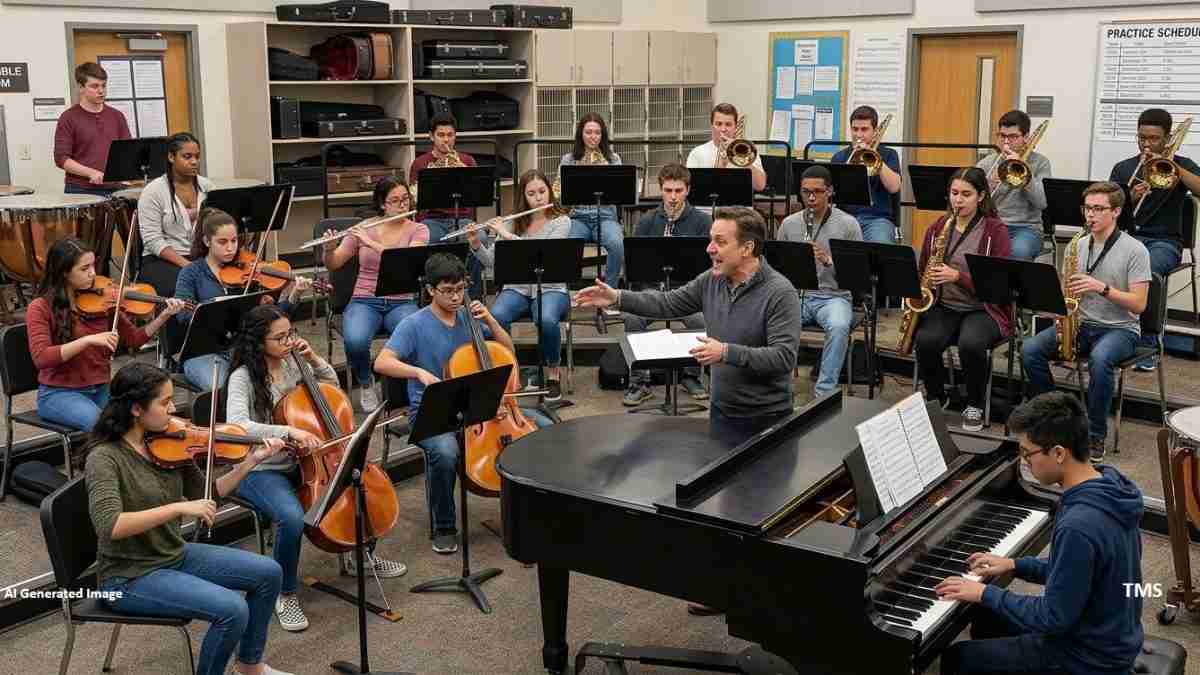
SACRAMENTO, Calif., Aug. 16 (Our California Times) — California schools are returning some arts-education money that they did not spend within the state’s three-year deadline, even as many districts say they need more time, teachers and guidance to put the funds to work.
The money comes from Proposition 28, approved by California voters in 2022. The law sets aside about $1 billion each year for arts instruction in public kindergarten-through-12th-grade schools.
The California Department of Education has not announced how much money was returned after the first three-year period. The department plans to redistribute unspent funds to schools that are using their allocations in line with the law, based on annual spending reports.
The result is a complicated transition: money intended for new arts opportunities may leave schools that could not spend it, while other schools may receive additional funds.
What did Proposition 28 require?
Prop. 28 distributes money mainly according to student enrollment. Schools serving larger numbers of low-income students receive additional funding.
The law also sets limits on how schools can use the money. At least 80% of each school’s allocation must pay for additional arts staff or educators. The remaining money can be used for supplies and other arts-related expenses.
The funding must supplement existing arts programs, rather than replace money that schools were already spending. In other words, a district generally cannot use Prop. 28 money simply to pay for an existing arts teacher or program and then count that position as an expansion.
Any money left unspent after three years must be returned to the state. That deadline is why schools are now sending back funds from the first spending period.
Why have schools struggled to spend it?
School officials and arts advocates have pointed to two main problems: finding qualified arts teachers and determining which expenses meet the law’s requirements.
Arts programs may require teachers with specialized skills in subjects such as music, dance, theater or visual arts. Schools also have to plan schedules, hire staff and document that the money is paying for new or expanded services. Those steps can be difficult for districts that did not previously have large arts programs.
El Dorado County Superintendent of Schools Ed Manansala said his county wants to avoid mistakes while putting the money to use.
“We need clarity and confidence that we’re doing this the right way,” Manansala said. “We have a long history of supporting the arts and we really want to make sure we do this right.”
The available reporting does not provide a statewide count of unfilled arts-teacher jobs. It also does not identify every school that returned money or the amount returned by each district.
Create CA, a nonprofit organization that supported Prop. 28, compiled data indicating that dozens — and possibly hundreds — of schools spent none of their allocations. The underlying dataset and a statewide total of returned funds were not included in the available information.
What does returning the money mean for students?
Returning unspent funds does not necessarily mean a school is ending an arts class. It means the school did not use all of its Prop. 28 allocation within the required period.
But unused money can limit the program expansions voters approved. Depending on the school, the funds might have supported additional teachers, classroom supplies or new instruction in music, dance, theater or visual arts.
The law’s supplement-not-supplant rule has also created concern. Arts organizations and labor leaders have alleged that some districts used Prop. 28 money for positions, programs or supplies they were already paying for. Those allegations have not produced a single statewide finding covering all districts, but they have led to calls for stronger documentation and oversight.
The California Department of Education receives schools’ spending reports and oversees compliance. The department also handles waivers in circumstances allowed by law and is responsible for redistributing unspent money.
Could the rules change?
Assemblymember Al Muratsuchi authored Assembly Bill 2440, which was reported as having passed the Assembly unanimously in May 2026. The proposal would allow districts to pool funds designated for individual schools. It would also allow districts that cannot meet the 80% educator-spending requirement to seek a waiver from the California Department of Education.
The supplied legislative information does not establish whether AB 2440 became law, its final language or an effective date.
The proposal has drawn criticism from opponents who say loosening the rules could weaken the requirement that Prop. 28 money expand arts education. Austin Beutner, a former superintendent of the Los Angeles Unified School District, said the bill would “gut” Prop. 28.
For schools, the central issue remains practical: how to add arts instruction, hire qualified educators and prove that the spending is new. Until the state releases a total for returned funds and provides more information about redistribution, the statewide effect on students and classrooms remains unclear.
