
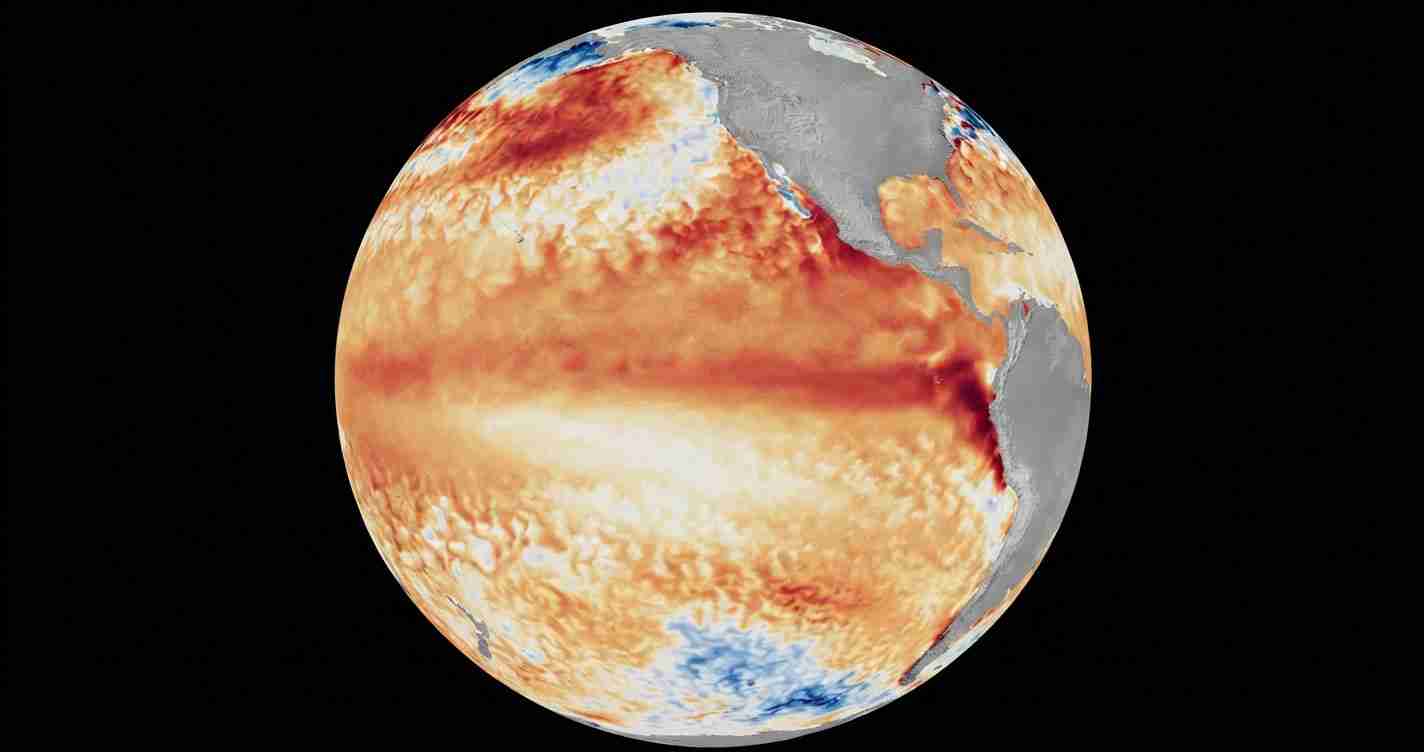
WASHINGTON, July 7 (San Diego News Online) — NOAA forecasters say El Niño is already underway in the tropical Pacific and is expected to strengthen through the Northern Hemisphere winter of 2026-27. For people making winter plans, the practical step is simple: keep an eye on NOAA seasonal outlooks and local forecasts, because El Niño can shift weather patterns and flood risks far from the equatorial Pacific.
What NOAA says now
On June 11, NOAA’s Climate Prediction Center issued an El Niño Advisory. The agency said El Niño conditions are present and that they are expected to strengthen into the Northern Hemisphere winter 2026-27.
NOAA said the warming developed over the past month, with above-average sea surface temperatures across the central to eastern equatorial Pacific Ocean. In the latest weekly reading cited by the CPC, the Niño-3.4 index was +0.7°C. The Niño-4 index was also +0.7°C, and the Niño-1+2 index was +2.1°C.
NOAA’s technical summary says the warming first appeared in the far eastern equatorial Pacific in early February and expanded across the central and eastern Pacific by mid-April.
How strong could it get?
The Climate Prediction Center said its North American Multi-Model Ensemble, including the NCEP CFSv2 model, points to further strengthening into winter 2026-27.
NOAA also said there is a 63% chance of a very strong El Niño during November-January. The agency said that could rank among the largest events in the historical record going back to 1950.
A forecast page from Columbia University’s International Research Institute for Climate and Society also says El Niño conditions are strengthening across the tropical Pacific and are likely to keep intensifying.
What is El Niño?
El Niño is the warm phase of ENSO, short for the El Niño-Southern Oscillation. It is a pattern of changing ocean temperatures and winds in the tropical Pacific.
When the Pacific warms, it can change atmospheric circulation and affect weather patterns in other parts of the world. That is why forecasters watch it closely even though the warming happens far from most places that feel its effects.
Why does it matter outside the Pacific?
For Washington, DC, this is mainly a national weather story, not a local warning. NOAA’s Ocean Service says El Niño can contribute to high-tide flooding in some U.S. locations.
The exact effects differ by region and season, so long-range forecasts are best treated as guidance, not a promise. For people with winter travel, outdoor work, or coastal plans, the useful move is to follow NOAA’s updates as winter gets closer.
Why forecasts can differ
Seasonal forecasts are based on probabilities, so different models do not always match perfectly on timing or strength. The common thread in the official NOAA forecast is that El Niño is already present now and is expected to build through winter 2026-27.
That makes the June advisory the key reference point: NOAA’s certified seasonal forecast source says El Niño is here, and the odds favor a stronger event as winter approaches.
